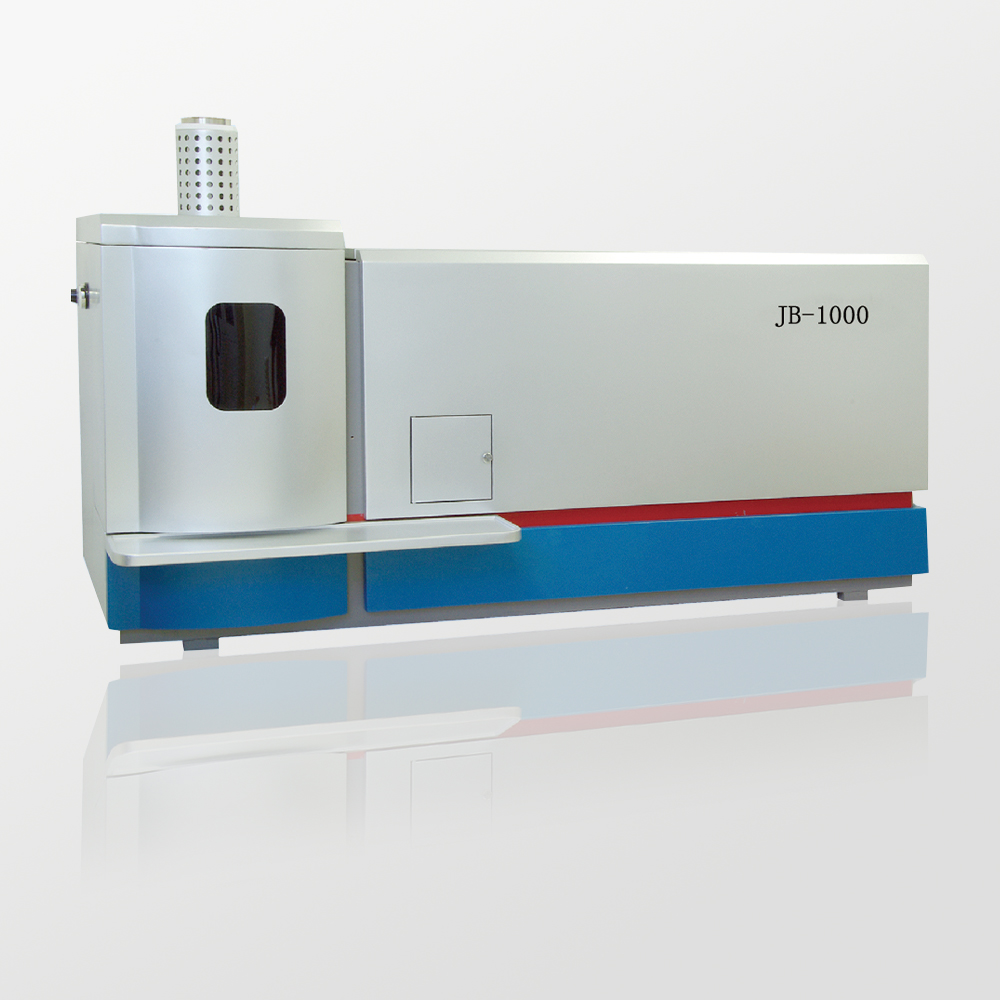
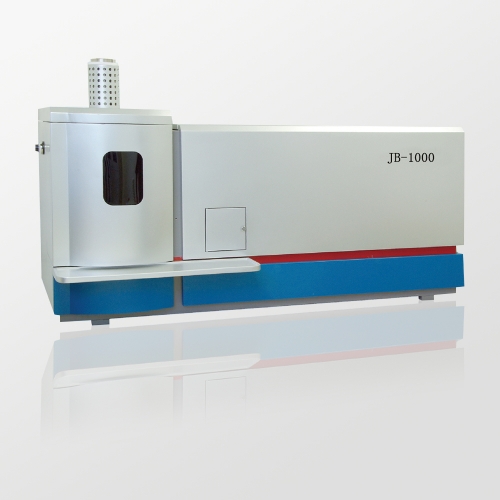
JB-1000 Inductively Coupled Plasma Optical Emission Spectroscopy

Item No.: 04
The inductively coupled plasma optical emission spectroscopy
 can measurate elements more than seventy that diversified from microanalysis to constant analysis. It is wide-ranging application in geologic,metallurgy, thulium, plating, cement,oil,chemical,

Description

Advanced Elemental Analysis for Industrial and Research Laboratories
The JB-1000 Inductively Coupled Plasma Optical Emission Spectroscopy instrument is designed specifically to meet the rigorous demands of industrial and research laboratories requiring dependable elemental quantification. Target users include materials scientists, quality control engineers, and analytical chemists who require multi-element detection capability covering over seventy elements. As a sophisticated icp-oes platform, it addresses challenges in complex sample analysis with automation and integration features to enhance workflow productivity. Its scalability enables incorporation into both standalone analytical stations and larger laboratory systems managed by spectrometer manufacturers.

High-Precision Optical Design and Automated Control Features
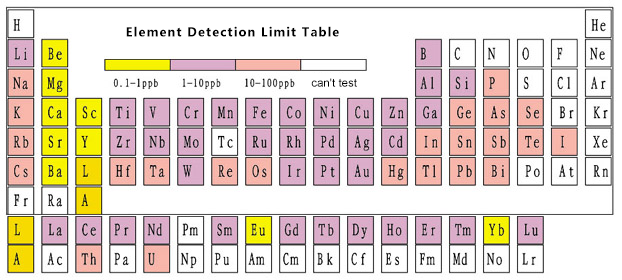
This analysis system incorporates a self-excited oscillation RF generator with fully automatic ignition and real-time power control dictated via computer software, ensuring consistent plasma stability. Its optical assembly uses a Czerny-Turner design with an ion-etched holographic grating providing impressive spectral resolution of ≤0.008 nm. The coverage spans wavelengths from 180 to 800 nm, delivering broad analytical capacity. Additionally, the system includes a constant-temperature light room and a high-stability photomultiplier tube for reliable signal acquisition and low detection limits reaching sub-ppb levels. These technical attributes position the JB-1000 as a high-performance spectrometer solution for multi-element elemental quantification.

Industrial Process Monitoring and Quality Assurance Applications
In practice, the JB-1000 enhances process control and product verification across metal alloy manufacturing, chemical processing, and geological sample analysis. Its ability to accurately detect trace impurities supports compliance with environmental and safety standards. The system streamlines method development, instrument calibration, and performance verification requirements, making it valuable for quality assurance teams. Integration into existing workflows is facilitated by its scalable software and robust mechanical design, ensuring operational continuity in demanding industrial environments. This spectrometer manufacturer offering effectively supports trace elemental analysis essential to many regulated sectors.


Product Advantages

Modular Design and Integration Optimized for Laboratory Scalability
The JB-1000's architecture features modular components including a quartz torch and coaxial sprayer designed for minimal maintenance and high plasma stability. The RF generator's fully automatic tuning and real-time power adjustments enhance system reliability in continuous operation. Optical elements such as ion-etched holographic gratings and the Czerny-Turner path are engineered for long service life and superior spectral resolution. Its design complies with laboratory standard configurations, supporting integration by spectrometer manufacturers aiming to align with existing laboratory instrumentation ecosystems. The robust construction withstands environmental stresses typical in industrial labs, supporting consistent performance and durability.

Enhanced Usability and Precise Analytical Performance for End Users
End users benefit from the JB-1000's computer-controlled operation which simplifies plasma ignition and parameter adjustments, reducing operator-dependent variables. The intuitive user interface accelerates training and method development while maintaining analytical precision. High-sensitivity detection and wide spectral coverage enable comprehensive elemental profiling, aiding trace impurity identification. The system’s stable photomultiplier tube and constant-temperature chamber ensure reproducible results critical for quality control workflows. This combination of performance and usability adds substantial value for professionals requiring a reliable icp oes instrument with superior accuracy and operational efficiency.


Technical Parameters 
 
Radio Frequency Generator (RF)
l Circuit type: self-excited oscillation circuit, fully automatic ignition and all functions are controlled by computer software (ignition, flameout, power and other parameter settings). Real-time power control, automatic matching and tuning. Constant temperature of light room.
l Working frequency: 40.68MHZ±0.05% 
l Frequency stability: <0.1% 
l Output power: 700-1600W 
l Output power stability: ≤0.3% 
l Electromagnetic field leakage radiation intensity: 300mm from the fuselage Electric field Intensity E: <2V/m
 
Sample Introduction Device
l Output working coil inner diameter 25mm, 3 turns
l Torch: Quartz torch with 20mm outer diameter
l Coaxial sprayer outer diameter 6mm
l Double barrel fog outdoor diameter 35mm
 
Argon gas flow meter specifications and carrier gas pressure gauge specifications 
l Plasma flow meter: 100-1000 L/h, 1.6-16L/min
l Auxiliary gas flow meter: 6-60 L/h, 0.1-1L/min
l Carrier gas flow meter: 6-60 L/h, 0.1-1L/min
l Carrier gas pressure regulator: 0-0.4MPa
l The instrument is equipped with a secondary argon regulator valve: 0.3MPa
    
Metering Device      
l Photomultiplier tube specification: R212UH
l Photomultiplier tube negative high voltage: 200-1000V, stability <0.05%
l Photomultiplier tube current measurement range: 10-12-10-4A
l Signal acquisition is V/F exchange: 1mV corresponds to 100Hz
 
Splitter
Optical path: Czerny-Turner
Focal length: 1000mm
Grating specifications: ion-etched holographic grating, line density 3600 lines/mm
                    Engraved area: 80×110mm, reciprocal of line dispersion rate: 0.26nm
Wavelength range: 190-500nm
Resolution: ≤0.008nm
Scanning wavelength range 3600 lines/mm Scanning wavelength range: 190-500nm
Stepping motor drive step distance: 0.0006nm
Entrance slit: 20µm, Exit slit: 25µm
Launch mirror specifications: (78 × 105 × 16) mm
Lens: ф30, 1:1 imaging


Machine Technical Indicators
l Measuring wavelength range: 180-500nm    3600L/mm
l 180-800nm    2400 L/mm
l Measurement accuracy (repeatability): average relative standard deviation RSD≤1%
l Measurement stability: average relative standard deviation RSD≤2
l Lower detection limit: sub-PPb 

About Us

Wuxi Jiebo Instrument Technology Co., Ltd. is located in the city of Wuxi, Jiangsu Province, China. For many years, we have been engaged in the production, sales, and customer service of chemical analysis instruments and related products. We not only combine the advantages of large-scale production with personalized service but also emphasize continuous technological innovation. Our market share ranks highly among peers, with equipment exported to the Middle East, Africa, Southeast Asia, West Asia, Eastern Europe, South America, and other regions.
Contact us now for your custom quote or technical consultation.


FAQ 

What types of samples can the Inductively Coupled Plasma Spectrometer analyze?
The ICP spectrometer is designed for multi-element analysis across a wide range of samples, including metals, alloys, minerals, and other materials. This enables laboratories to accurately determine both major and trace elemental concentrations for diverse industrial applications.

How customizable is the ICP-OES instrument to specific laboratory needs?
Customization options are available for the ICP-OES spectrometer to accommodate specific analytical workflows and sample types. Customers can request tailored configurations to optimize detection limits, sensitivity, and software functions, ensuring reliable and reproducible results.

What kind of maintenance and sample preparation does the ICP spectrometer require?
The ICP spectrometer requires routine maintenance focused on plasma source stability and detector calibration. Sample preparation is minimal, typically requiring digestion or dissolution depending on the material. Automated sample handling reduces manual intervention, helping maintain consistent analytical performance.

What is the typical lead time and delivery process for an ICP analyzer order?
Lead times for the ICP analyzer vary according to configuration and service level. Prospective buyers should contact the sales team directly for accurate delivery estimates. Wuxi Jiebo provides logistics solutions to global markets including the Middle East, Africa, and Southeast Asia to ensure timely instrument receipt.


Review

1/3
X
SIGNUP FOR OUR NEWSLETTER
Subscribe free newsletter to get latest products and discount information.
About Us
Wuxi Jiebo Instrumentl Technology Co.,Ltd. is located in the city of Wuxi, Jiangsu Province, China. For many years, we engaged in the production, sales and customer service of chemical analysis instruments and related products. We not only have the advantages of scale of products and personalized service but also have the advantages in the process of technological innovation. The market share has been ranked counterparts and equipment exported to the Middle East, Africa, Southeast Asia, West Asia, Eastern Europe, South America and other countries.
More About Us
More About Us

Copyright u00a9 Wuxi Jiebo Instrument Technology Co. Ltd.All Rights Reserved    POWERED BY UEESHOP
Stay In The Know
Enter your email to hear from us about Product list, Latest Products and Customer application examples!