Advanced Solution for Molten Iron Quality Control
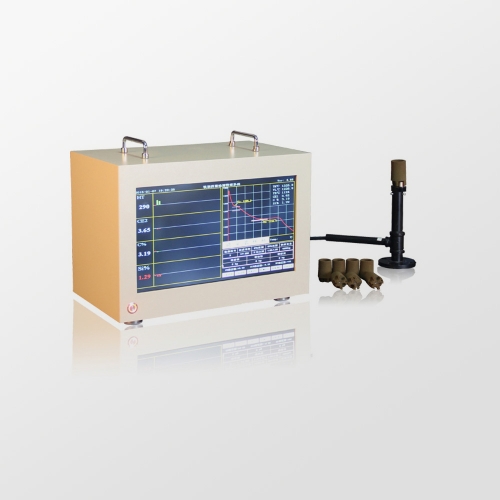
The JB-TS6 Intelligent Carbon Silicon Analyzer is engineered for metallurgical laboratories, foundries, and carbon sulfur analyzer manufacturers seeking precise pre-furnace molten iron analysis. Designed to predict carbon and silicon content rapidly, it supports alloy formulation and process optimization. The instrument leverages advanced thermal analysis technologies to provide timely data essential for refining casting quality, enhancing production control, and minimizing waste within industrial workflows requiring high accuracy and reproducibility.
Precision Technology and Comprehensive Specifications
Employing military-grade industrial motherboards and a 19-inch TFT true color display, the JB-TS6 delivers rapid results in approximately 90 seconds. The analyzer monitors thermal behavior across a broad temperature range (0 to 1370°C) with fine resolution (0.1°C), applying phase-diagram theory for data interpretation. Carbon and silicon content estimations allow foundry engineers to maintain alloy consistency. This device integrates seamlessly with existing lab standards, making it a reliable tool alongside instruments from spectrometer manufacturers and carbon sulfur analyzer manufacturers.
Critical Role Across Metallurgical Industries
In metallurgical R&D, foundries, and quality control departments, the JB-TS6 plays a pivotal role in process parameter optimization and material qualification. By analyzing molten metal’s solidification phases, it enables verification of alloying element content prior to casting. This supports reduction of casting defects and scrap rates while improving mechanical properties of finished products. The device is compatible with laboratory environments focusing on chemical analysis equipment, complementing other technologies like optical emission spectroscopy market instruments and spectrophotometer manufacturers’ equipment.

Product Advantages
Robust Design Meets Industrial Demands
The JB-TS6 Intelligent Carbon Silicon Analyzer incorporates a compact desktop design housing a military-level industrial motherboard, ensuring durability in industrial environments. Its robust electronics provide stable operation under varying humidity and temperature conditions (up to 50°C and <76% humidity), ideal for rigorous metallurgical labs and production floors. This design coherence offers seamless integration with laboratory systems from spectrometer manufacturers and complements instruments used by carbon sulfur analyzer manufacturers and spectrophotometer manufacturers, enhancing modularity and workflow efficiency.
Enhanced Performance and Analytical Value
With an analysis time of just 90 seconds, the JB-TS6 improves throughput for foundries and metallurgical labs requiring rapid evaluation. Its user-friendly interface reduces operator error and speeds up routine testing cycles, delivering high-precision carbon and silicon assessments critical for consistent alloy quality. The accurate thermal analysis supports strategic alloy adjustments, effectively reducing scrap and rework costs. This performance level aligns well with quality-focused environments where technologies from ultrasonic thickness gauge suppliers and spectrometer manufacturers are already employed.
Introduction
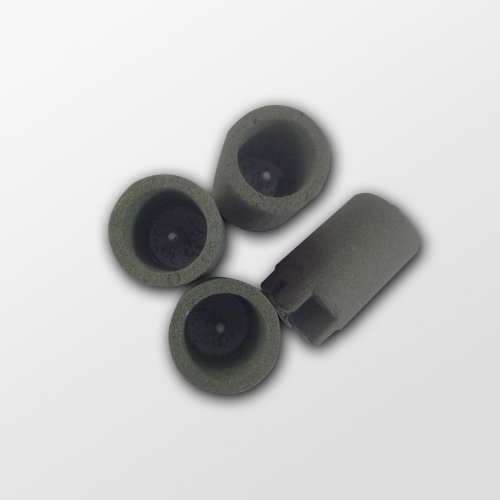
The technology of molten iron thermal analysis is from the phase diagram theory in metallography. It has already been widely used in iron liquid analysis and control before furnace in developed countries. It’s an indispensable detection method in advanced casting technology. It plays a very important role in the production of high quality castings. All people who work on casting technology know the carbon equilibrium phase diagram as the basic tool of metal materials research and production. Someone called the cooling curve in the casting thermal analysis as fingerprint of metallurgical quality. The basic principle of rapid prediction and forecast in the casting thermal analysis before furnace is based on the records of cooling curve of molten iron in a particular carbon cup by thermal analysis instruments. The iron carbon equilibrium phase diagram reflects the solidification process of molten iron composition and quantitative relations between the phase change temperature. The state of hot metal solidification phase change temperature has a certain relationship with the various properties of casting iron. We forecast the various parameters of metal materials through this kind of relationship and control the production process. The method of iron carbon equilibrium diagram is similar with molten iron cooling curve by thermal analysis technology. The differences between them is that the result of carbon equilibrium diagram is determined under an ideal state. But the cooling curve of thermal analysis technology is determined by the actual production of molten iron. Its composition is relatively complex. The shape of the cooling curve and standard condition have a certain difference. But this kind of difference can represent the actual state of the molten iron. We use the actual cooling curve of iron for quality analysis and control is more close to the production practice. The test result will be more accuracy with higher control precision. It will play a much more important role in the production.
Parameter
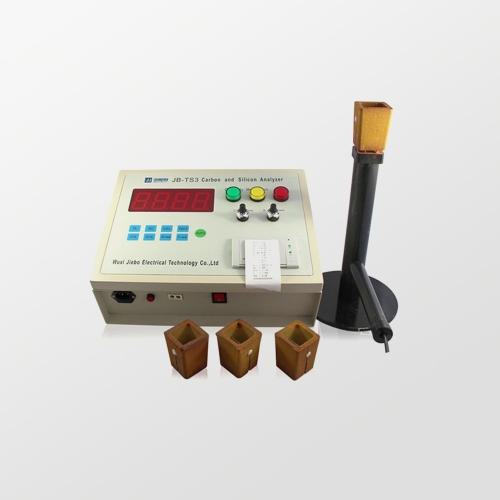
Main Unit: Military level industrial motherboard
Working Humidity: <76%
Display: 19 inch TFT true color display
Working Temperature: 0~50℃
Power: AC 220V 50Hz
Power consumption: 200W
Appearance : Desktop
Analysis Time: 90 Seconds
Analysis Precision
|
Item |
Measuring Range |
Measuring Precision |
|
Resolution |
0.1℃(0-1370℃) |
0.1%F.S |
|
CE% |
2.30%-4.83% |
±0.10% |
|
C% |
2.20%-4.30% |
±0.05% |
|
Si% |
0.20%-3.80% |
±0.10% |
|
SG% |
60%-95% |
±10.0% |
|
RM |
HT100-HT350 |
Min |
Use Scenarios
Pre-Furnace Alloy Quality Verification in Foundries
In foundry operations producing cast iron components, precise control of carbon and silicon content is imperative to meet specification standards. The JB-TS6 is utilized pre-furnace to analyze molten iron samples, forecasting elemental composition within 90 seconds. This instrument’s rapid, accurate thermal curve interpretation enables foundry engineers to optimize alloy recipes and adjust process parameters before casting. Its integration with metallurgical lab quality control protocols ensures compliance with industry standards and supports coordination with equipment from carbon sulfur analyzer manufacturers and spectrometer manufacturers.
Metallurgical Research and Development Applications
Research institutes and quality laboratories focusing on alloy development employ the JB-TS6 for detailed molten iron phase behavior analysis. It delivers critical data on solidification temperatures aligned with carbon-silicon equilibrium diagrams, supporting metallurgical scientists in understanding alloy properties and improving compositions. This analyzer’s compatibility with thermal analysis workflows enhances R&D efficiency, facilitating benchmarking alongside instruments such as spectrophotometers from spectrophotometer manufacturers and ICP-OES technologies found on the optical emission spectroscopy market.

FAQ
What industries benefit most from the JB-TS6 Intelligent Carbon Silicon Analyzer?
The JB-TS6 serves foundries and metallurgical laboratories by providing rapid molten iron analysis for carbon and silicon content, essential for alloy composition and quality control. It supports applications such as pre-furnace analysis and process optimization—crucial in sectors focused on metal casting and carbon sulfur analyzer manufacturer standards.
Can the JB-TS6 be customized or integrated into existing lab workflows?
Yes, the JB-TS6 features a user-friendly interface and compatibility with standard laboratory procedures, allowing easy integration into foundry or metallurgical R&D workflows. Its desktop design supports compact setups, and technical teams can assist with specific configuration and customization needs involving spectrometer manufacturer requirements.
What are the basic installation and operating conditions for the JB-TS6?
The instrument operates on AC 220V 50Hz power, with a working temperature range of 0–50°C and humidity below 76%. Installation requires a stable desktop space within these environmental parameters to ensure reliable performance of this carbon sulfur analyzer manufacturer device in industrial or lab settings.
How is maintenance handled for the JB-TS6, and what support is available?
Maintenance involves routine calibration and cleaning to maintain sensor accuracy and ensure fast analysis times. Wuxi Jiebo provides technical support and service to assist with troubleshooting and periodic updates, assuring continued compliance with spectrophotometer manufacturers quality standards for molten iron analysis instruments.